
Groundworks Limerick
How Groundworks Actually Works on a Limerick Site (Depth Section)
The first thing that happens on any groundworks job is a proper look at what's actually there — soil type, drainage behaviour, existing services, access for plant, and what's going into the ground above the groundworks once this stage is finished. On Limerick clay, which is the predominant ground type across much of the city and the southern suburbs like Raheen and Dooradoyle, water movement through the soil is slow. That affects drainage design, soakaway viability, and how long freshly poured concrete needs before it's loaded. Further out toward Patrickswell, Adare, and into Clare, ground conditions shift toward better-draining material — but assuming either condition without checking is where groundworks specs go wrong.
Excavation depth for strip foundations under a domestic extension in Limerick typically runs deeper than the minimum precisely because of clay shrink-swell behaviour — clay expands when wet and contracts when dry, and a foundation that's too shallow moves with it. A structural engineer's specification takes precedence where one's been engaged; where the project is domestic and doesn't require one, we work to the depths Irish building regulations and ground conditions call for.
Drainage falls get set with a level from the start of a run, not adjusted at the end. A 1:40 gradient is the standard minimum for a foul drain, steeper for surface water channels where debris is a factor. Getting this wrong shows up eventually — either as a blocked system or as one that self-cleans by scouring sediment and causing erosion around the pipe. Both are avoidable with a level and the right fall set before the pipe goes in.
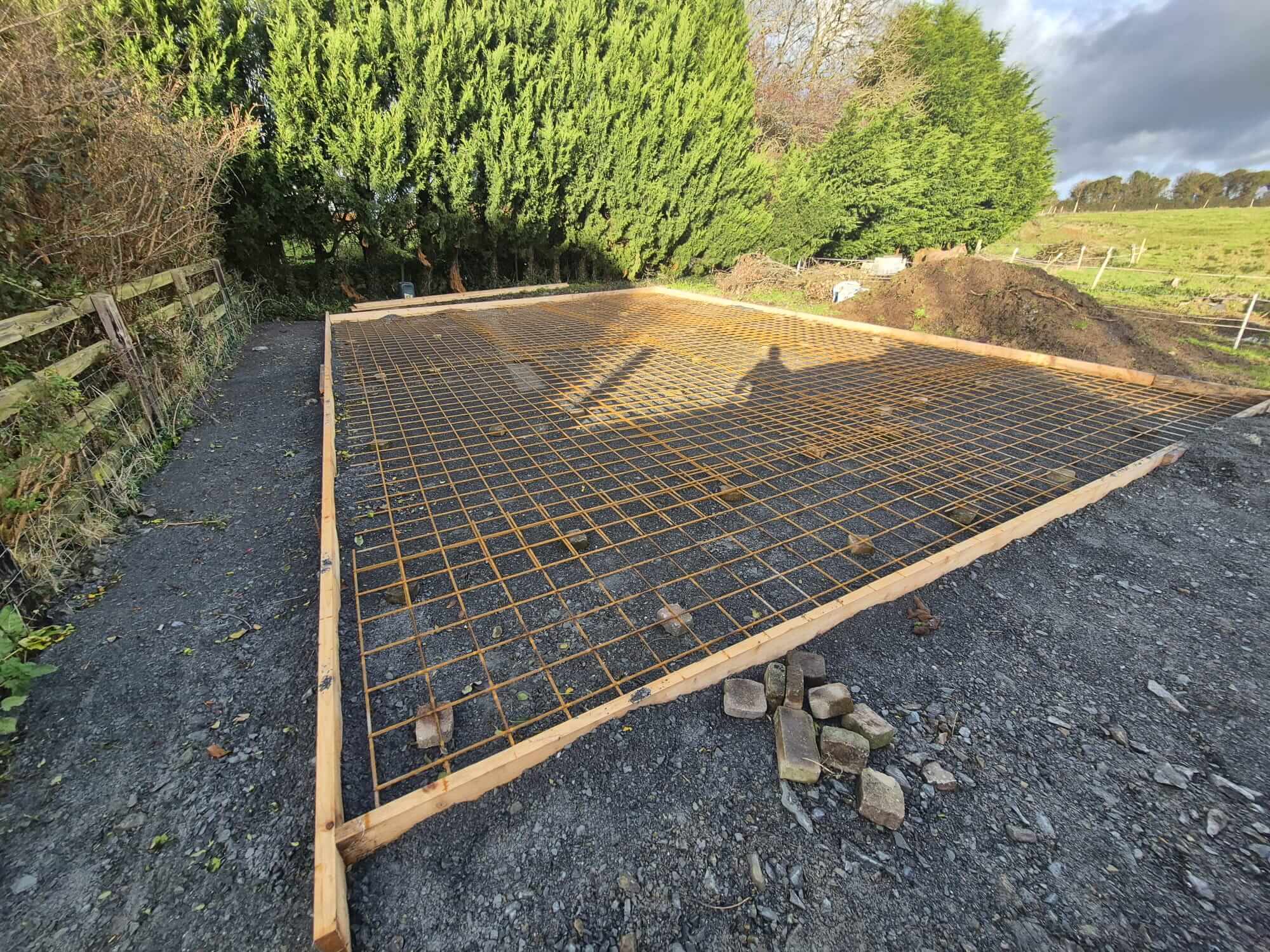
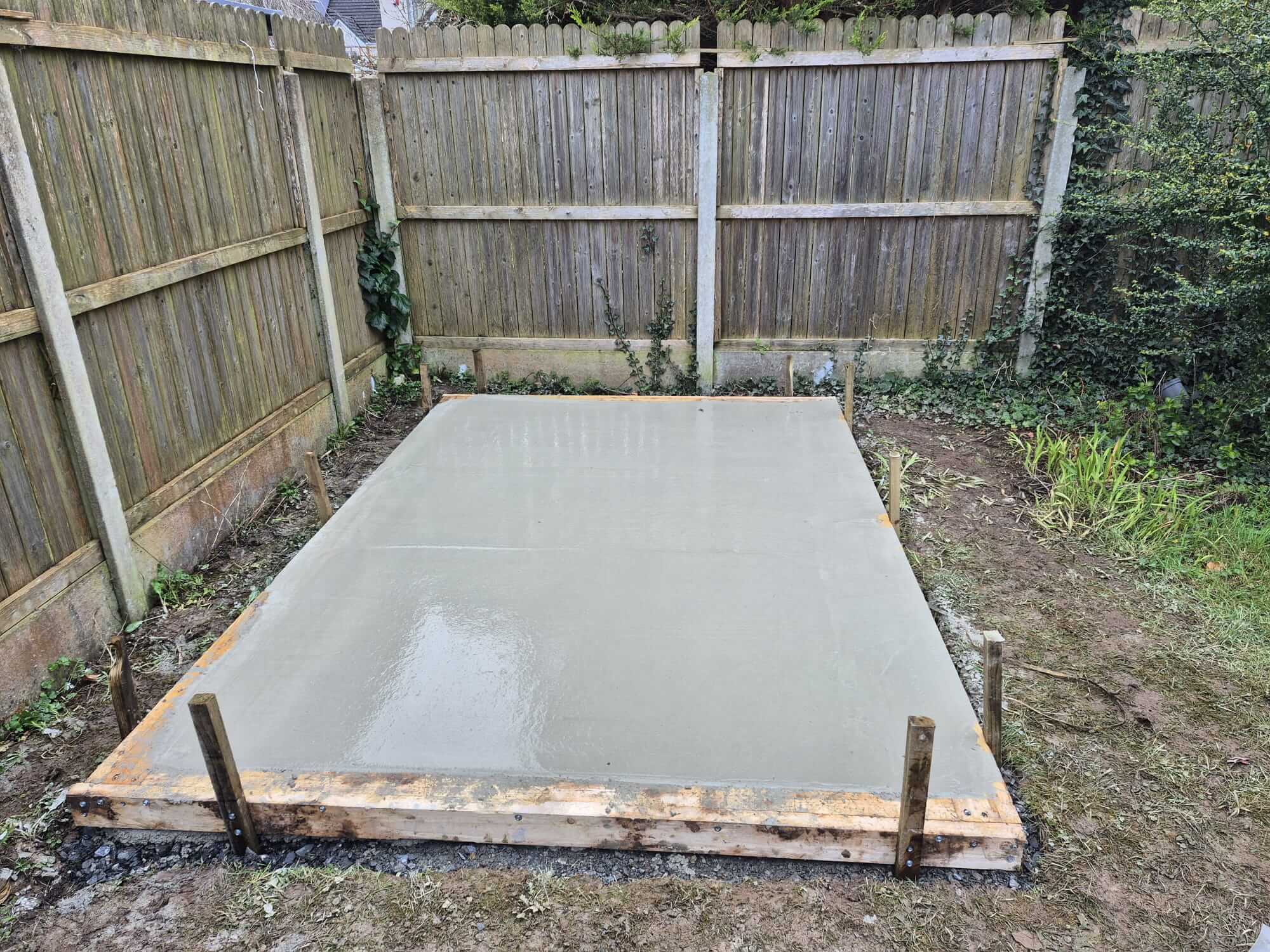
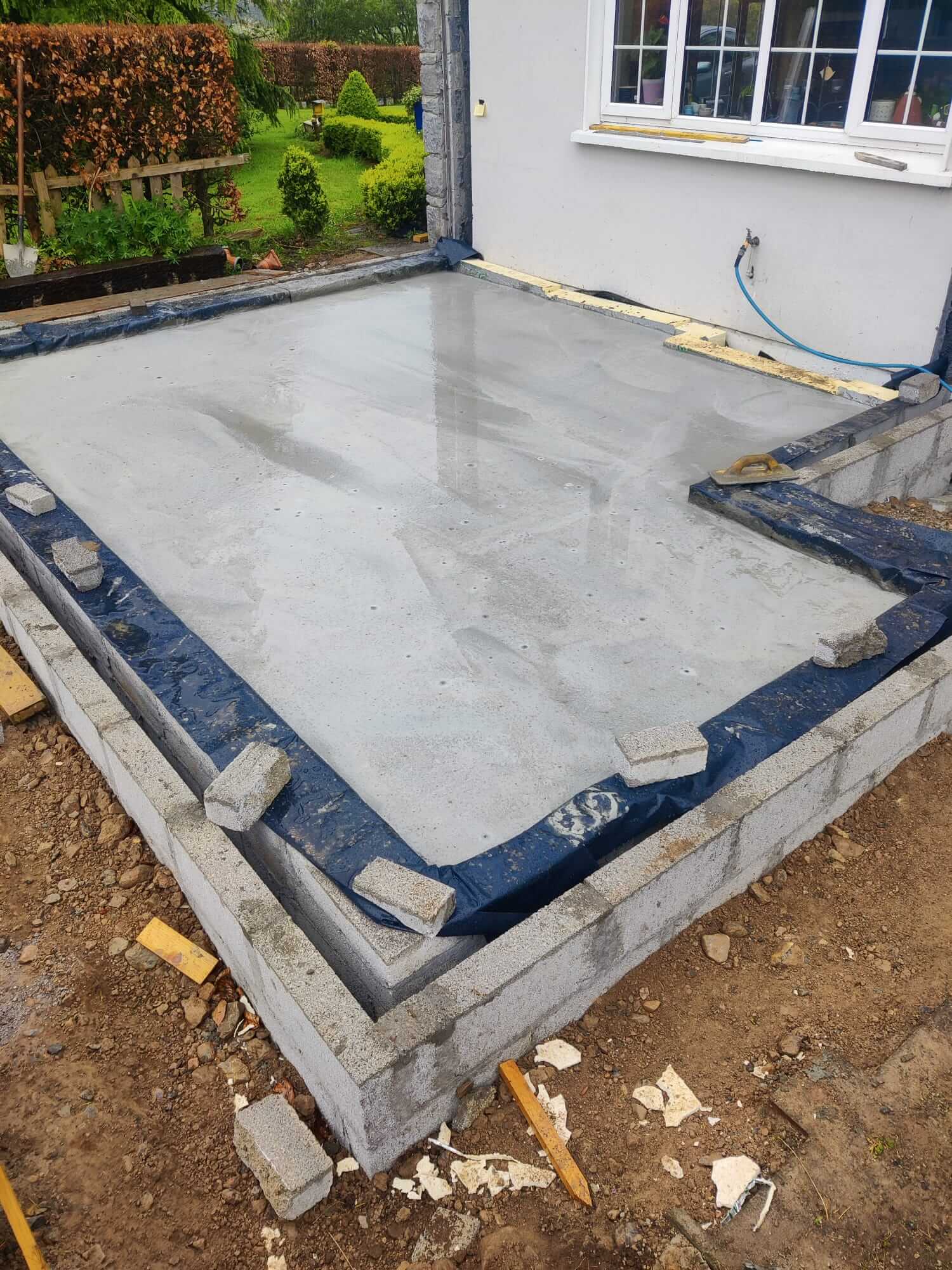
Where groundworks connects directly to the next stage — a garden room build, a paving installation, or a new extension — we sequence the work so the groundworks crew has finished and the ground has had time to settle before the structure above begins. Pouring a slab and building on it too quickly is the most common cause of cracking in the finished concrete.
Groundworks Services Across Limerick
Signs You Need a Groundworks Contractor in Limerick
Water pooling on a yard, patio, or lawn that doesn't drain away within a few hours of rain is nearly always a drainage problem underneath — either failed drainage, no drainage at all, or compacted ground that's lost its permeability.
Cracks in an existing foundation or concrete slab that are widening over time are a movement issue, almost always traced back to inadequate foundation depth or unstable ground beneath the slab.
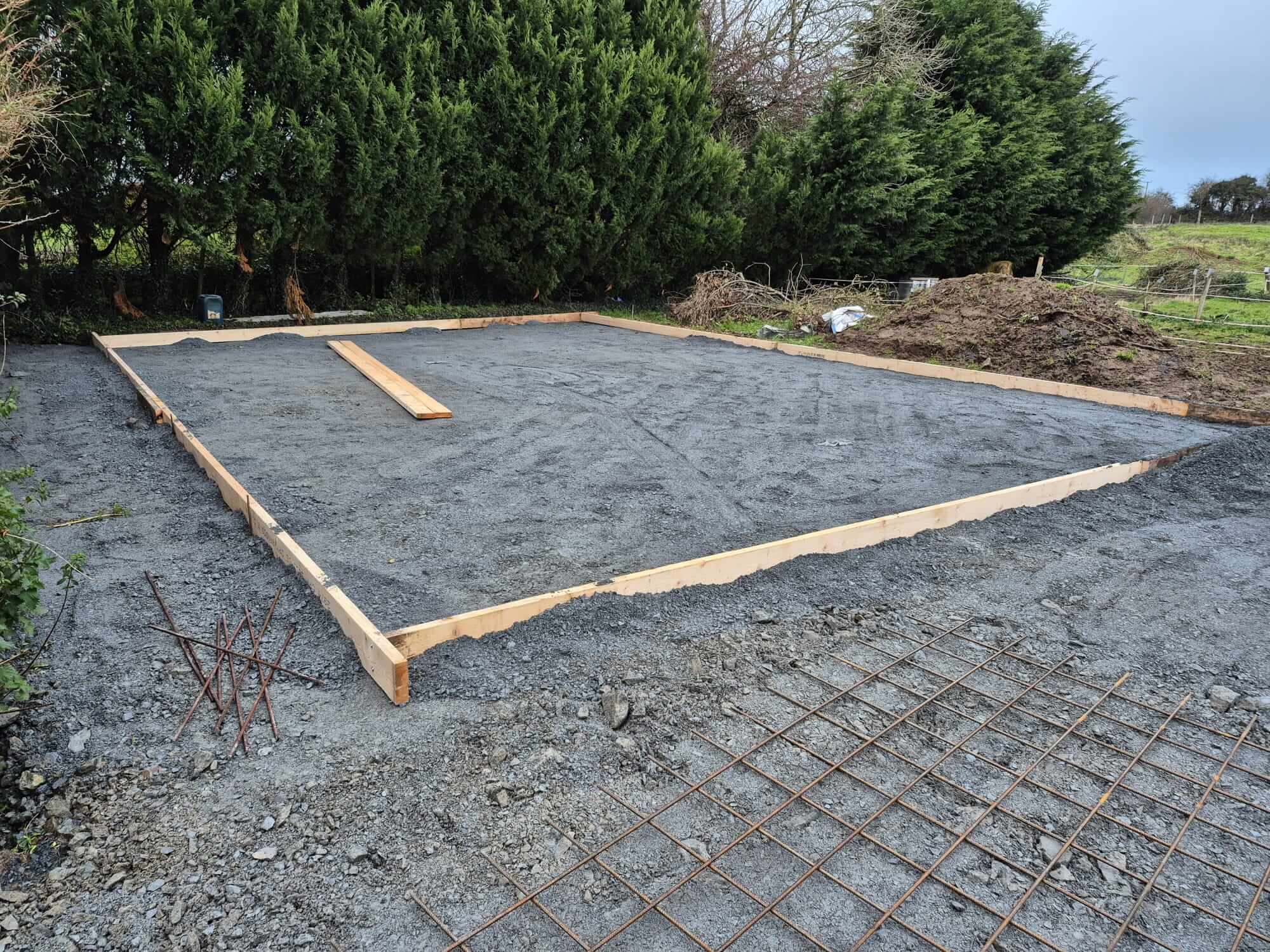
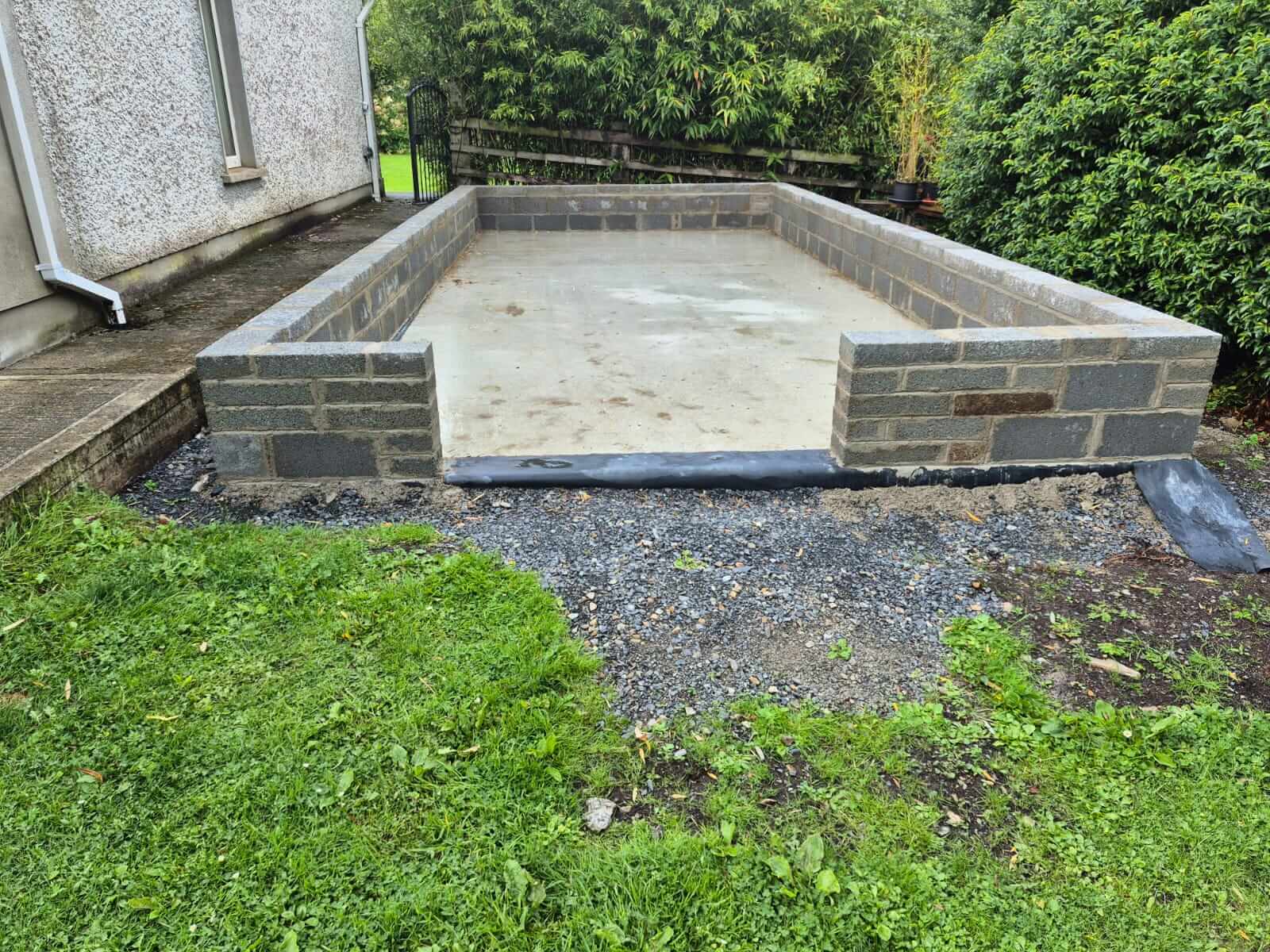
A sloped site that needs levelling before a garden room, extension, or paving installation goes in requires groundworks before the build can start.
And new builds or extensions at planning permission stage need groundworks priced as a separate line item — it's consistently the most underestimated cost on a domestic project.
Areas We Cover Across Limerick
Most of our work is within easy reach of Mungret — Raheen, Dooradoyle, Castletroy, Annacotty, Patrickswell and Adare are all regular jobs, along with Limerick city itself.
Further out, we cover Newcastle West, Rathkeale, Bruff and Kilmallock without it adding much to the timeline, since groundworks and garden room jobs don't need daily site visits once they're underway.
We also take on projects across the county border — Newmarket-on-Fergus and Sixmilebridge in Clare, and Nenagh and the surrounding area in Tipperary — though Limerick stays the priority when it comes to scheduling.
If you're outside these areas, get in touch anyway; it's worth a call to check rather than assuming you're too far out.

What Affects the Price of Groundworks in Limerick
Groundworks is one of the harder services to quote without a site visit because the variables are underground until the machine starts digging. The main factors that move the price:
Ground conditions — clay, rock, made ground, or contaminated soil all dig differently and some require different disposal or treatment. Limerick city sites in older areas occasionally have made ground or rubble fill from previous buildings underneath, which doesn't show on the surface.
Access for plant — a 3-tonne mini digger can get through a standard side gate. A larger machine on a site with restricted access means either a smaller machine that takes longer, or material moved by hand — both add cost relative to open-access sites.
Excavation depth and volume — deeper foundations and larger footprints move more material. Spoil removal is priced per load, and clay is heavier than topsoil, which affects haulage cost.
Drainage complexity — a simple surface water channel is a half-day job. A full foul and surface water drainage system for a new build with soakaway and inspection chambers is several days across multiple trades working in sequence.
Concrete specification — reinforced slabs cost more than plain concrete oversite; the specification is driven by what's going on top of it, not by preference.
Groundworks FAQs
Both — standalone drainage, foundation, or excavation jobs are taken on regularly, as well as groundworks as the opening stage of a garden room build, extension, or paving installation.
Depends on soil type and what's being built. On Limerick clay, foundation depth typically runs deeper than the minimum to account for soil movement. The specification gets confirmed after the site is assessed, not estimated over the phone.
Yes — access gets assessed before the quote so the right plant is allocated. Restricted access changes the approach and gets priced accordingly upfront.
Yes — surface water drainage, foul drainage, soakaways and French drains. Falls and connections get set correctly from the start of the run.
A foundation excavation and pour for a domestic extension typically runs three to five days. A full drainage installation or larger site clearance takes longer. Realistic timelines are given at quote stage.
Yes — excavated material is removed as part of the job. Clay and contaminated material has higher disposal costs than clean fill, which gets reflected in the quote rather than appearing as a surprise at the end.
Fully insured, with a written guarantee on every job.
Any Questions?
Ask Us
Get a Free Groundworks Quote in Limerick
Groundworks is consistently the stage of a project that gets underestimated at the planning phase — both in cost and in how much the quality of the work affects everything built above it. A site visit takes an hour and gives you an accurate written quote based on actual ground conditions, access, and the spec required for what's going on top. We're currently booking groundworks jobs across Limerick and the surrounding area — get in touch to arrange a visit before the schedule fills.
More Services We Offer Across Limerick
Guilfoyle Building Services offers six trades, run by people who actually do the work — not subcontracted out to whoever's free that week. Pick one service or run several as a single sequenced project; either way, here's what's covered.

Garden Rooms
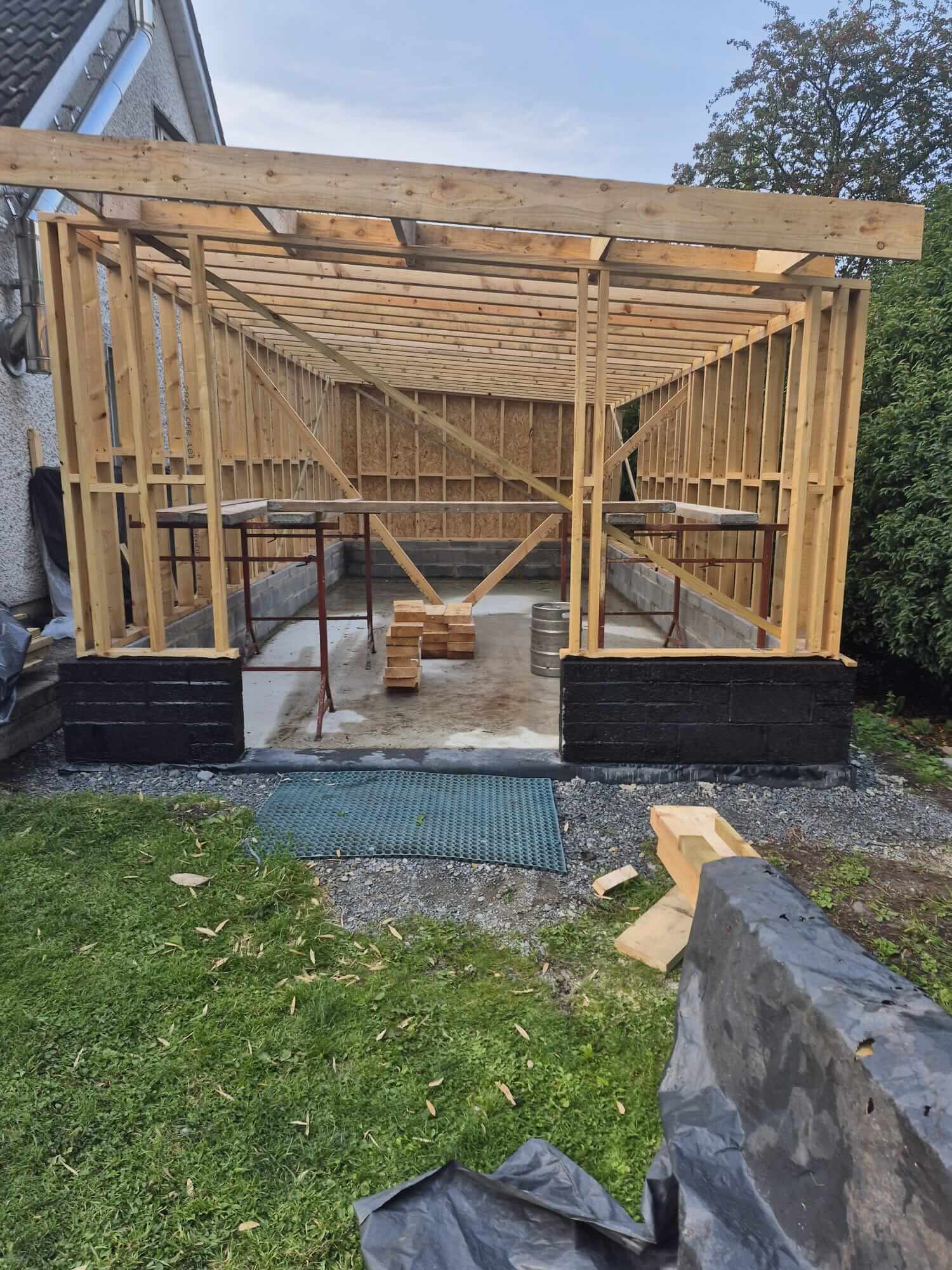
Timber-frame construction on a proper concrete or piled base, depending on ground conditions — not a shed kit bolted to slabs. Insulated to handle a Limerick winter, wired by a registered electrician, glazed for actual daylight. Office, gym, studio, granny flat: the structure's the same, the fit-out changes.

General Building Work
Extensions and renovations from foundation to final coat of paint. Blockwork, structural steel where it's needed, plastering, first and second fix carried out by the same crew throughout — so nobody's waiting three weeks for the next trade to show up.

Groundworks
Excavation, hardcore compaction, drainage runs and concrete poured to the right depth for what's going on top of it. A patio needs a different sub-base than a garden room foundation, and a foundation needs a different spec again depending on whether you're on Limerick clay or something better draining. We check before we dig, not after.

Paving
Block paving, resin-bound surfaces, natural stone — laid on a compacted sub-base with proper falls for drainage and edge restraints that actually hold. A driveway that pools water at the door six months in was never installed right to begin with.

Carpentry
Staircases, decking, fitted units, structural and finish carpentry on site or built off-site and fitted. Skirting that's actually mitred, doors that actually hang straight — the difference between carpentry and someone handy with a saw.

Landscaping
Retaining walls in block or sleeper, drainage where water's pooling, turf and planting once the hard landscaping's settled. Usually the last job on a project, after groundworks and paving have already moved the ground around.