
Carpenters in Limerick
How Carpentry Fits Into a Build in Limerick
On any building project, carpentry runs in two distinct phases separated by plastering — and what happens in each phase affects the quality of the finished result in ways that aren't always visible once the walls are painted.
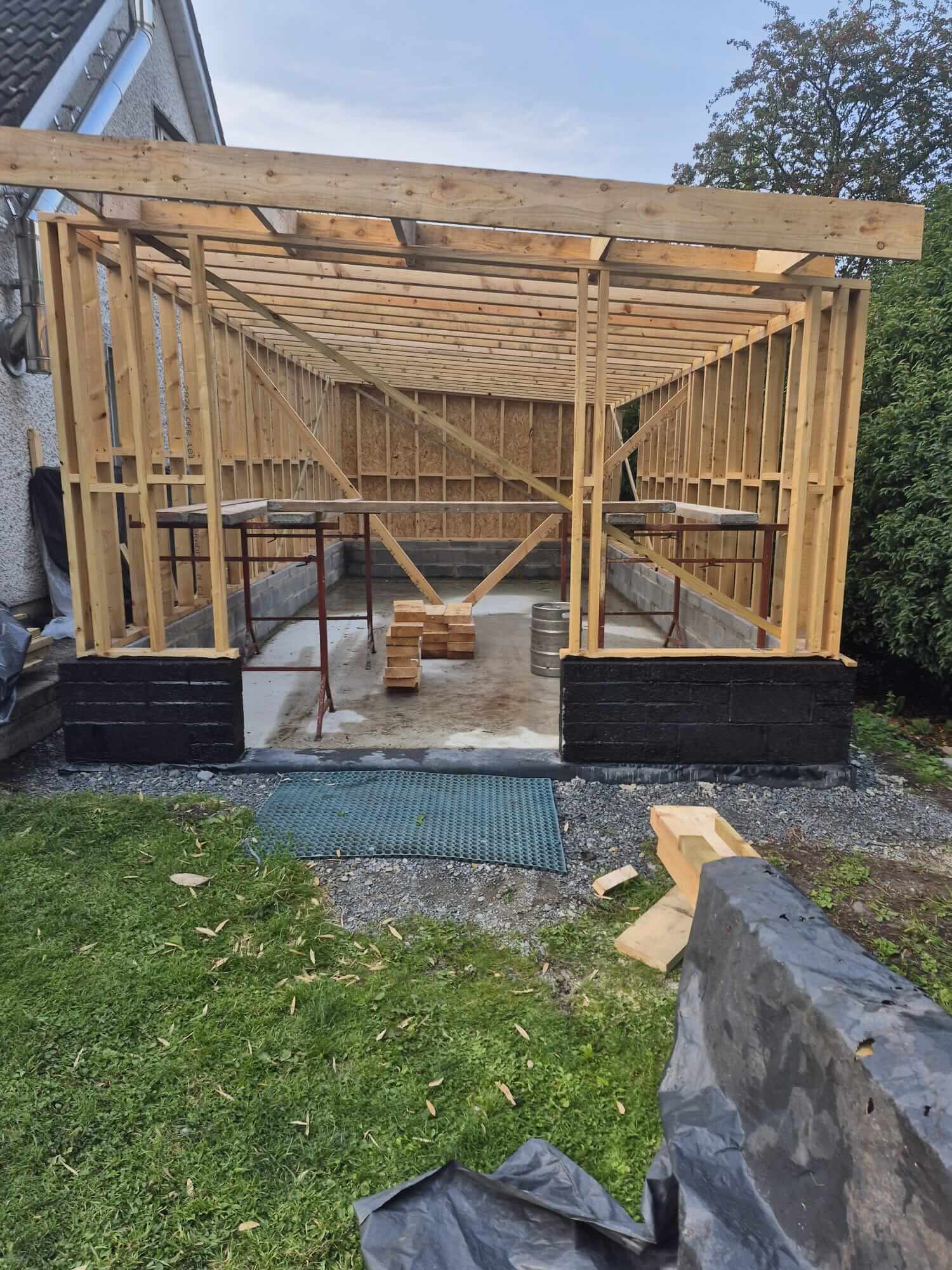
First fix is the carpentry that gets covered up — stud walls built to the correct spacing for the plasterboard that's going on them, roof timbers sized for the span and load above them, floor joists noggled to prevent lateral movement. The tolerance at first fix is tighter than most people expect: a stud wall built 10mm out of plumb will still take plasterboard and plaster, but every door frame, architrave and skirting board fitted against it in second fix will need to compensate for that deviation. Getting first fix square and plumb is what makes second fix straightforward rather than a series of adjustments.
Second fix is what the homeowner sees and lives with. Door hanging is more involved than it looks from the outside — the door needs to be sized correctly for the lining, hinges positioned at the right height and depth so the door sits flush when closed, and the latch and lock furniture aligned so the mechanism engages without lifting or forcing. A door that sticks or rattles within a year of being hung was either hung in a frame that moved after plastering, or hung with insufficient clearance for seasonal timber movement. Skirting and architrave are mitred at internal and external corners, scribed to uneven plaster where the floor or ceiling isn't level, and pinned at intervals close enough that no section lifts away from the wall.
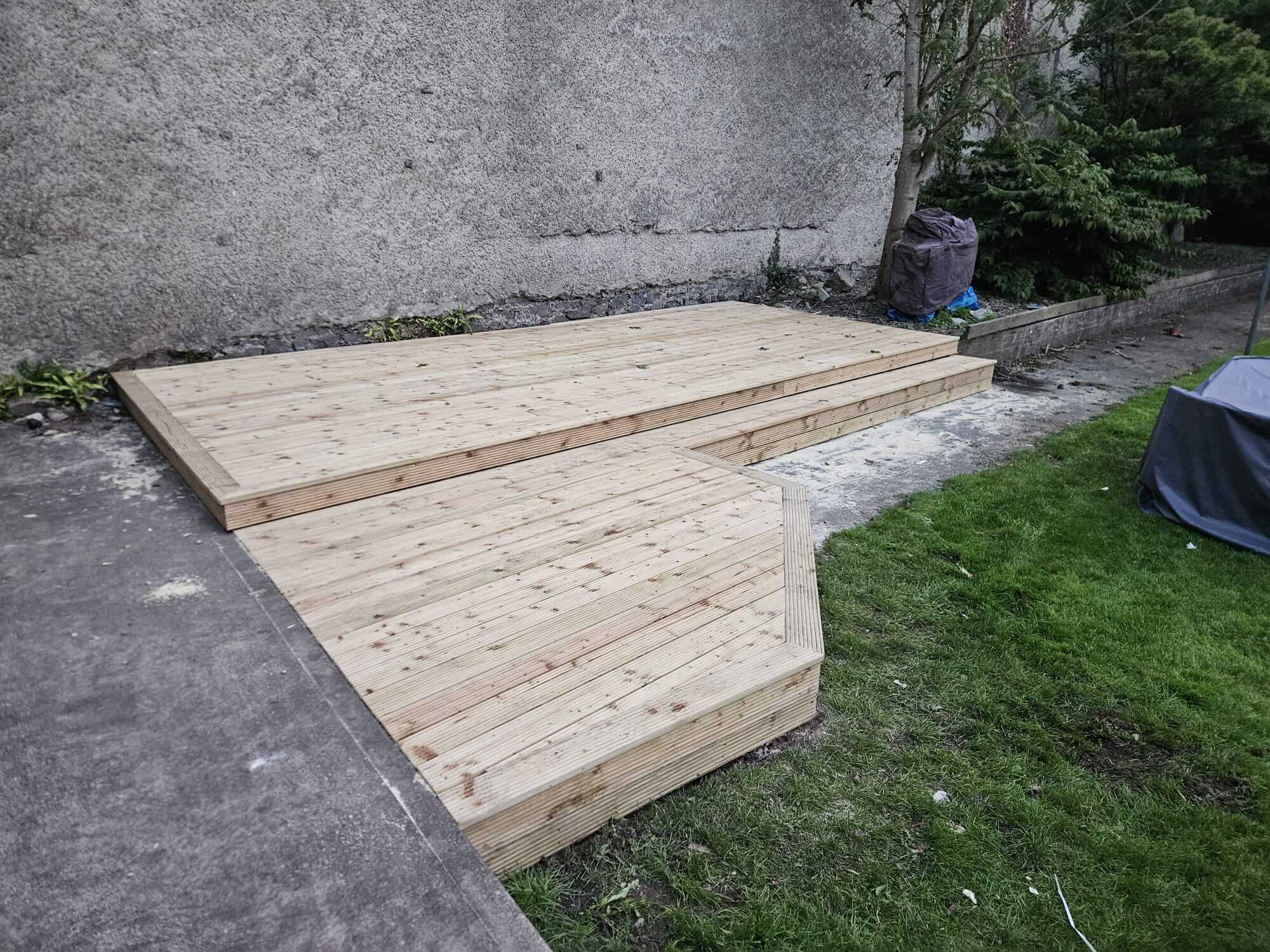
For decking and outdoor timber work, the sub-structure is the part that fails first when it's underspecified. Joists sitting in contact with soil or in poorly ventilated spaces rot from beneath while the decking surface above still looks usable. Bearers set on concrete pads or adjustable feet, joists at centres appropriate for the board thickness, and a board gap of 5–6mm for drainage and timber movement — those are the details that determine whether a deck is sound at ten years or replaced at five.
Carpentry Services Across Limerick
Signs You Need a Carpenter in Limerick
Doors that have started sticking, dropping at the latch, or showing a gap at the top corner are a sign either of seasonal movement in the frame or of the building settling — worth assessing whether it's a hanging issue or a structural one before rehinging.
Skirting pulling away from the wall, particularly in older properties, usually means the plaster behind it has failed or the fixing points have deteriorated.
Decking that's soft underfoot in sections but firm in others points to joist failure beneath the boards rather than surface wear — the decking itself often looks fine while the structure underneath has rotted through.
And any extension or renovation project that's reached plastering stage needs second fix carpentry sequenced in promptly — leaving openings and frames exposed to moisture after plastering slows the drying and can cause movement in door linings before they're hung.
Areas We Cover Across Limerick
Most of our work is within easy reach of Mungret — Raheen, Dooradoyle, Castletroy, Annacotty, Patrickswell and Adare are all regular jobs, along with Limerick city itself.
Further out, we cover Newcastle West, Rathkeale, Bruff and Kilmallock without it adding much to the timeline, since groundworks and garden room jobs don't need daily site visits once they're underway.
We also take on projects across the county border — Newmarket-on-Fergus and Sixmilebridge in Clare, and Nenagh and the surrounding area in Tipperary — though Limerick stays the priority when it comes to scheduling.
If you're outside these areas, get in touch anyway; it's worth a call to check rather than assuming you're too far out.

What Affects the Price of Carpentry in Limerick
Carpentry is priced per job after a site visit or detailed scope, with these being the main variables:
Scope of work — first fix only, second fix only, or both together as part of a full project are priced differently. A full second fix package for a four-bedroom extension is a different job to hanging three doors and fitting skirting in a single room.
Timber specification — softwood is the standard for most first and second fix; hardwood for decking, stairs, and bespoke joinery costs more per metre but performs better in exposed or high-wear situations.
Access and site conditions — working in an occupied house, around existing furniture, or in tight stairwells adds time relative to open new-build conditions.
Bespoke versus standard — standard door linings, skirting profiles and architraves are faster to fit than bespoke profiles or custom-built units. Bespoke joinery is priced on its own merits once the design is confirmed.
Number of doors and openings — door hanging is priced per door; the number of openings, whether frames are already in place, and the door specification (fire door, solid core, hollow core) all affect the rate.
Carpentry FAQs
Yes — structural first fix as part of an extension or garden room build, and full second fix once plastering is finished, including doors, skirting, architraves and window boards.
Yes — door replacements and rehinging in existing properties are carried out as standalone jobs.
Yes — framed sub-structure and decking boards in hardwood or softwood, sized and spaced correctly for the span and drainage requirements.
Yes — supply and fit of domestic timber staircases, including balustrade and handrail to building regulation requirements.
Yes — carpentry is sequenced into larger projects as the relevant stage, rather than being booked separately and arriving at the wrong point in the build.
Fully insured, with a written guarantee on every job.
Limerick city and county are the priority, with regular work across Clare and Tipperary for larger projects.
Any Questions?
Ask Us
Get a Free Carpentry Quote in Limerick
Whether it's a full first and second fix package on an extension, a staircase installation, or a specific second fix job that's been waiting for the right tradesperson, the starting point is a site visit and a written quote. We're booking carpentry work across Limerick and the surrounding area — get in touch to arrange a time.
More Services We Offer Across Limerick
Guilfoyle Building Services offers six trades, run by people who actually do the work — not subcontracted out to whoever's free that week. Pick one service or run several as a single sequenced project; either way, here's what's covered.

Garden Rooms
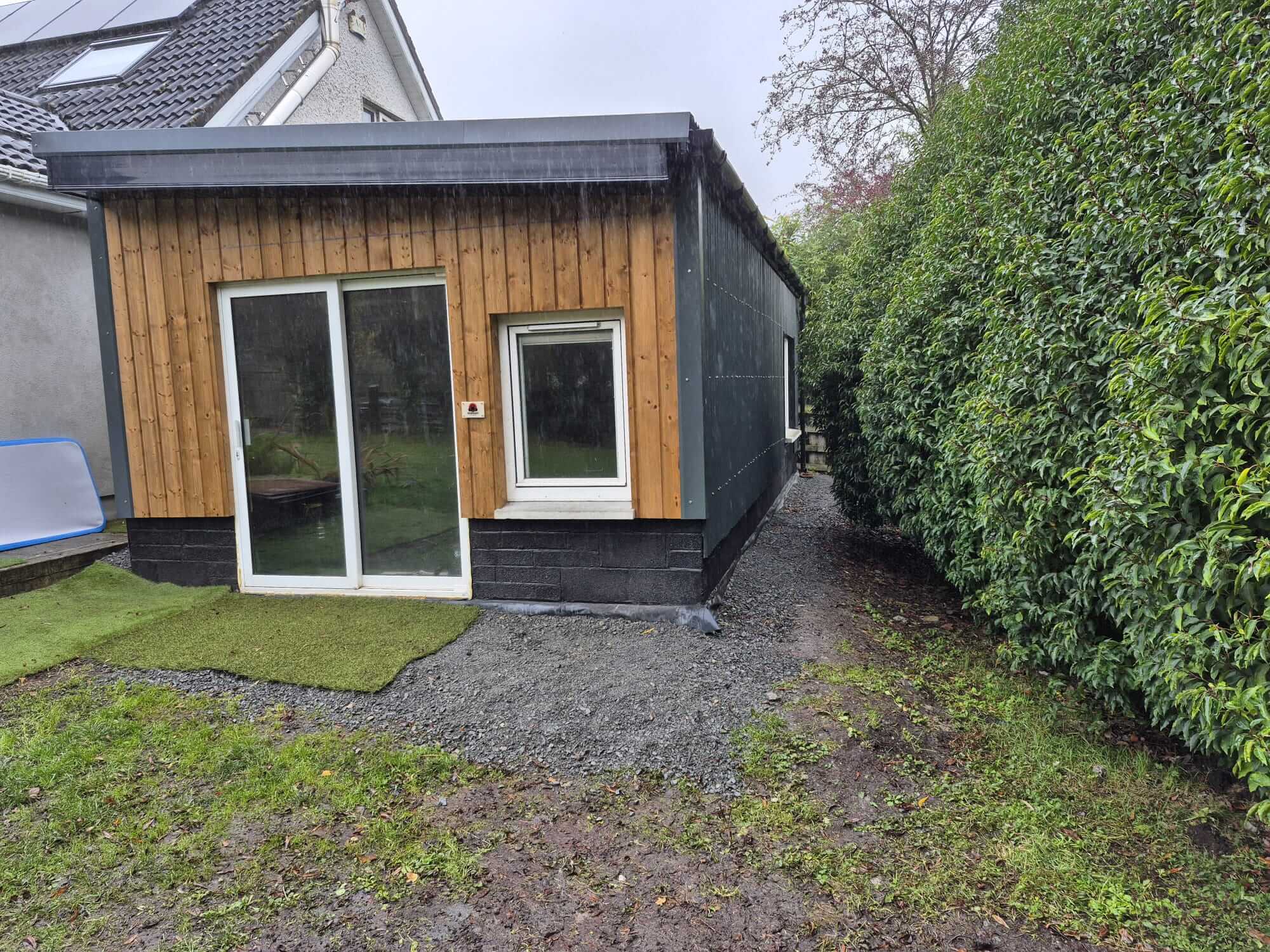
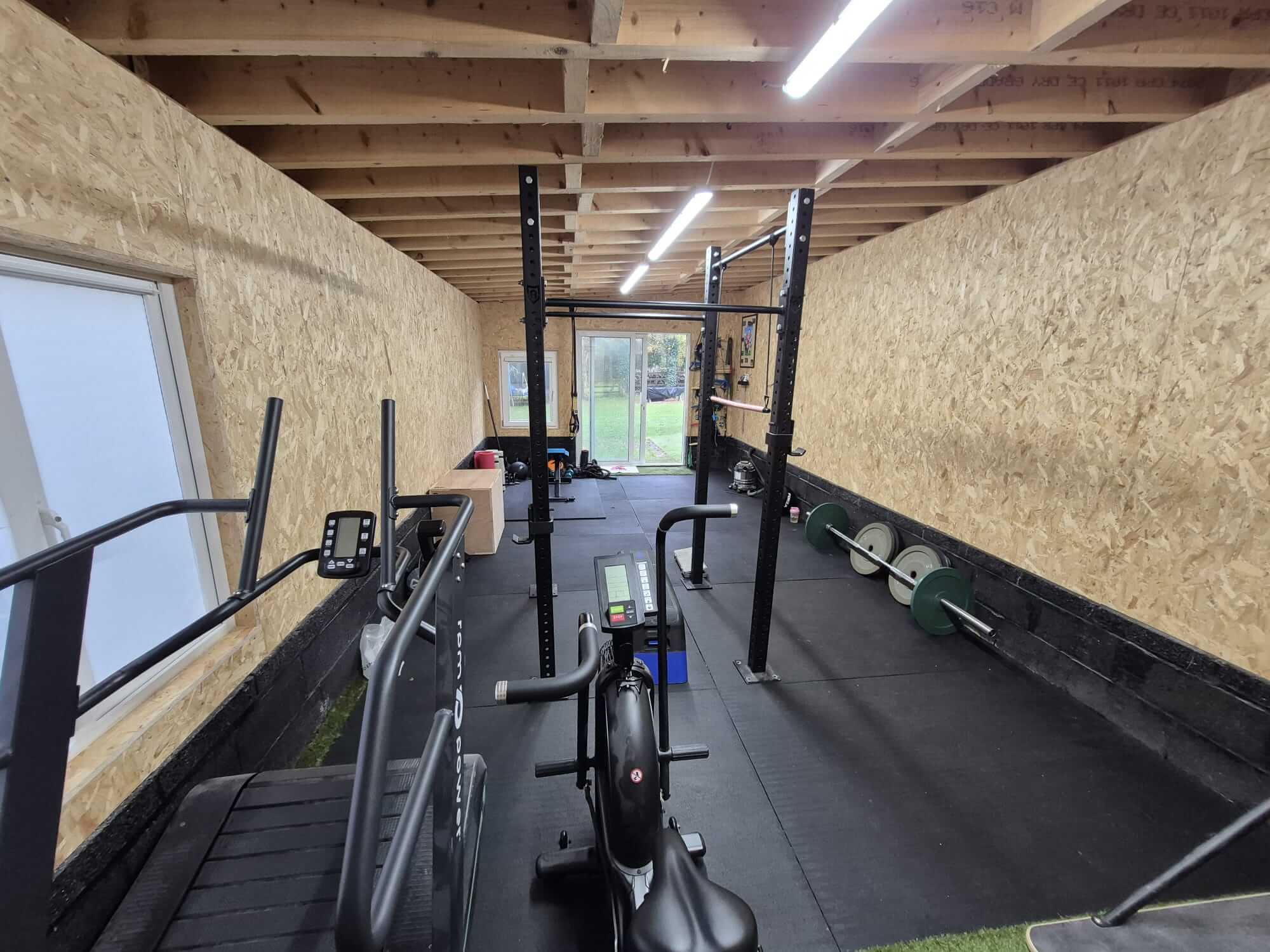
Timber-frame construction on a proper concrete or piled base, depending on ground conditions — not a shed kit bolted to slabs. Insulated to handle a Limerick winter, wired by a registered electrician, glazed for actual daylight. Office, gym, studio, granny flat: the structure's the same, the fit-out changes.

General Building Work
Extensions and renovations from foundation to final coat of paint. Blockwork, structural steel where it's needed, plastering, first and second fix carried out by the same crew throughout — so nobody's waiting three weeks for the next trade to show up.

Groundworks
Excavation, hardcore compaction, drainage runs and concrete poured to the right depth for what's going on top of it. A patio needs a different sub-base than a garden room foundation, and a foundation needs a different spec again depending on whether you're on Limerick clay or something better draining. We check before we dig, not after.

Paving
Block paving, resin-bound surfaces, natural stone — laid on a compacted sub-base with proper falls for drainage and edge restraints that actually hold. A driveway that pools water at the door six months in was never installed right to begin with.

Carpentry
Staircases, decking, fitted units, structural and finish carpentry on site or built off-site and fitted. Skirting that's actually mitred, doors that actually hang straight — the difference between carpentry and someone handy with a saw.

Landscaping
Retaining walls in block or sleeper, drainage where water's pooling, turf and planting once the hard landscaping's settled. Usually the last job on a project, after groundworks and paving have already moved the ground around.