
Paving Limerick
How We Lay Paving in Limerick
The lifespan of any paved surface comes down to three things: sub-base depth and compaction, edge restraint, and drainage falls. Everything else — the surface material, the pattern, the finish — sits on top of those three decisions.
Sub-base on a domestic driveway in Limerick typically runs to 150mm of compacted hardcore minimum, deeper on softer or clay-heavy ground. The hardcore is laid in layers and compacted with a vibrating plate rather than just rolled once and left — each layer needs to be compacted before the next goes on, otherwise the whole base continues to settle under vehicle weight after the surface is finished. On sites across Raheen, Dooradoyle and Mungret where Limerick clay is the predominant ground type, drainage within the sub-base layer matters as much as compaction — water sitting in the sub-base through an Irish winter freeze-thaw cycle is what shifts blocks and cracks slabs.
Edge restraints on a block paved driveway are set in concrete haunching on both sides of the paved area before the blocks go in. The edge course is what keeps the whole field of blocks locked in position — without it, blocks migrate outward under load and the surface spreads and loosens. Spike-in plastic edging, sometimes used to cut installation time, doesn't hold once vehicle weight is applied repeatedly at the same points.
Drainage falls are set from the string line before any material goes down. Water on a driveway or patio needs somewhere to go — either into a drainage channel, a soakaway, or sheeting off the surface into a lawn or planted area. A flat surface that allows water to sit opens the mortar joints in natural stone, gets under resin bound surfaces, and softens the sand bed under block paving. Falls are set at the correct gradient for the surface type and the drainage available on the site.
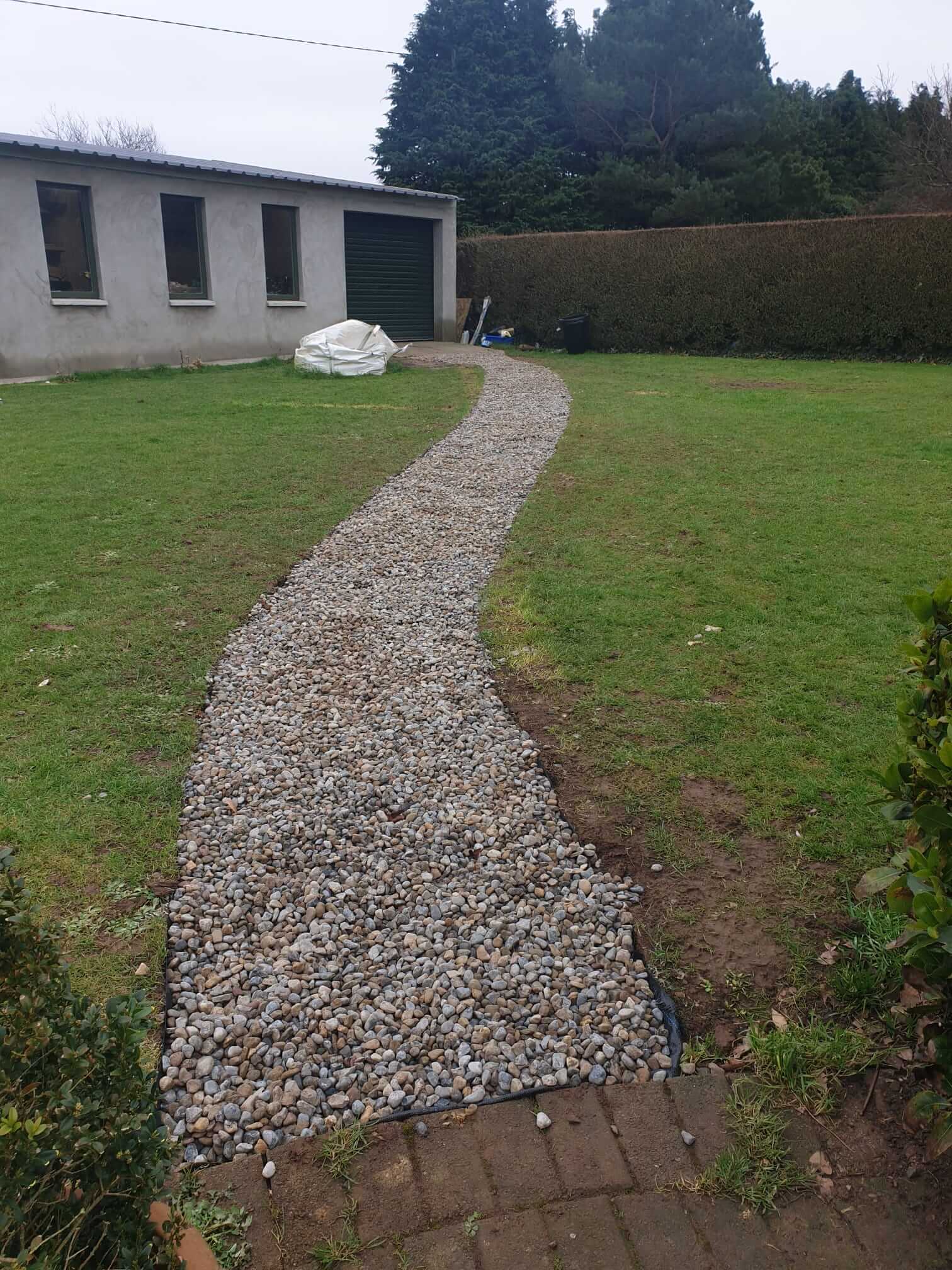
Paving Services Across Limerick
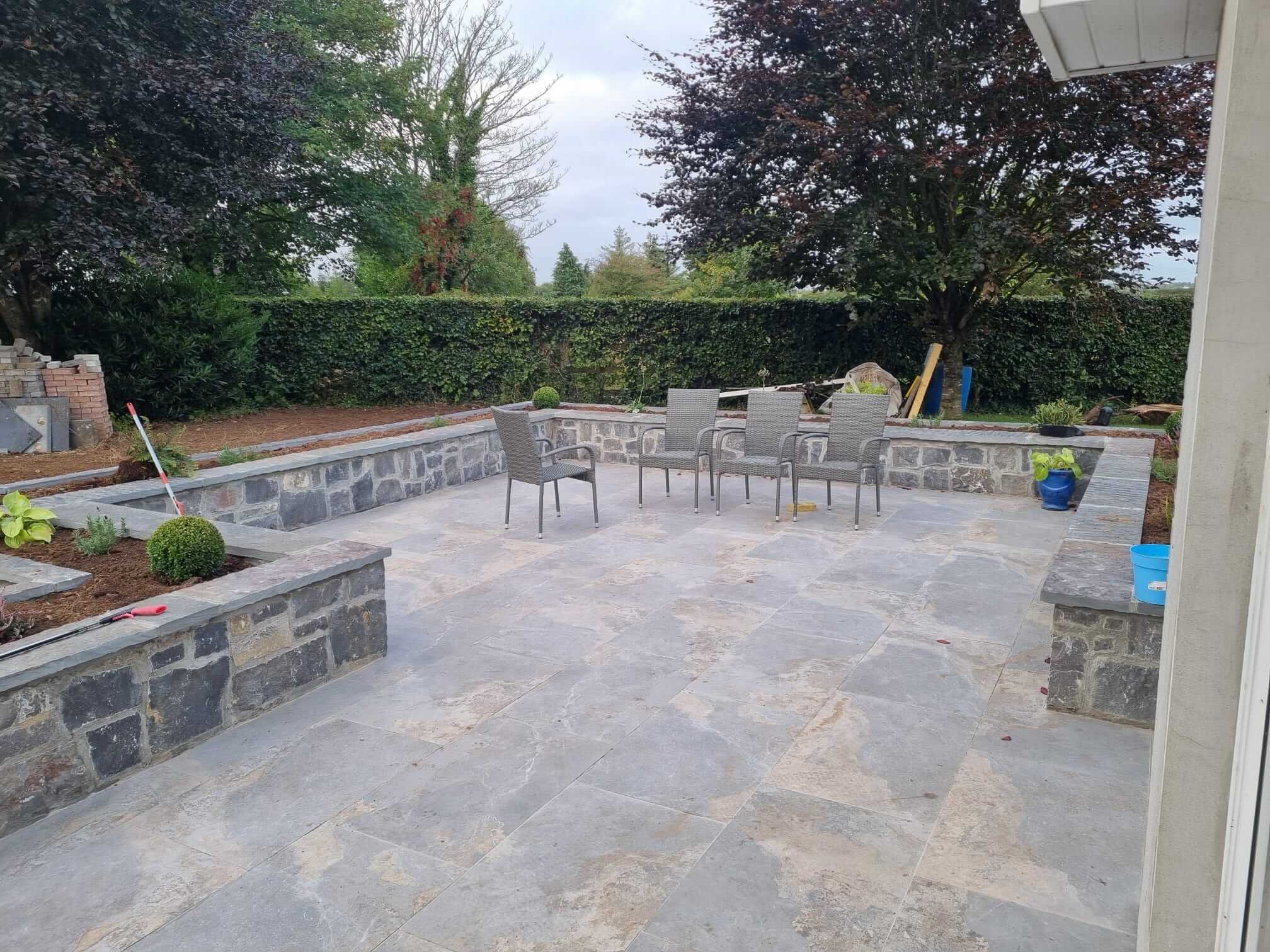
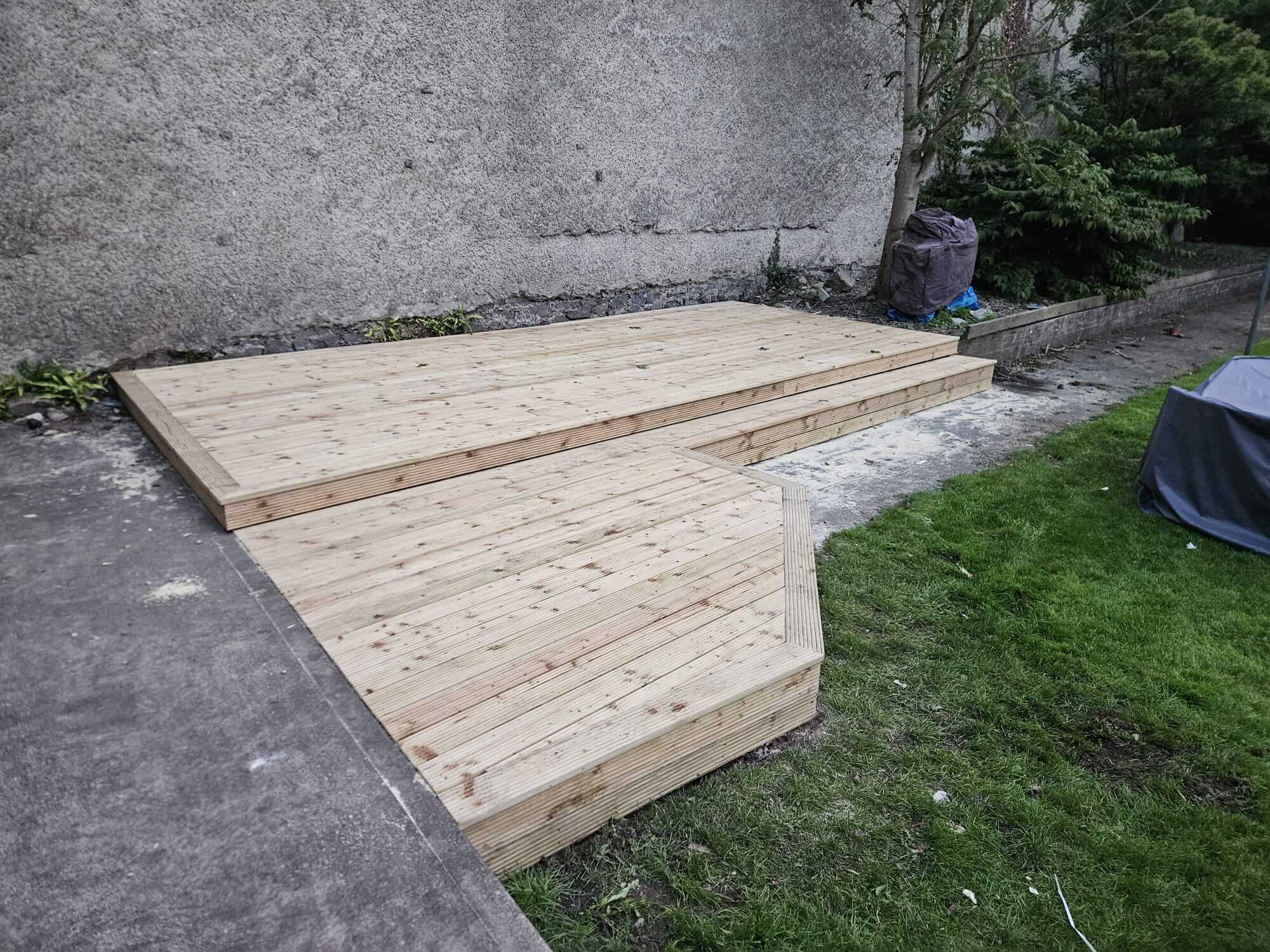
Signs You Need a Paving Contractor in Limerick
Sinking or uneven blocks on an existing driveway or patio are a sub-base failure — the hardcore beneath has compressed further than it should have, either because it was underlaid or because water has been moving through it and washing fine material out from underneath.
Cracking in a poured concrete surface follows the same pattern — inadequate depth, inadequate reinforcement, or water movement beneath.
Pooling water on a patio or driveway after rain that sits for hours means drainage falls were set incorrectly at installation or drainage has become blocked.
And a driveway surface over ten to fifteen years old that's starting to show any of these signs is typically at the end of its serviceable life — a repair at that stage costs more in the medium term than a properly prepared replacement.
Areas We Cover Across Limerick
Most of our work is within easy reach of Mungret — Raheen, Dooradoyle, Castletroy, Annacotty, Patrickswell and Adare are all regular jobs, along with Limerick city itself.
Further out, we cover Newcastle West, Rathkeale, Bruff and Kilmallock without it adding much to the timeline, since groundworks and garden room jobs don't need daily site visits once they're underway.
We also take on projects across the county border — Newmarket-on-Fergus and Sixmilebridge in Clare, and Nenagh and the surrounding area in Tipperary — though Limerick stays the priority when it comes to scheduling.
If you're outside these areas, get in touch anyway; it's worth a call to check rather than assuming you're too far out.

What Affects the Price of Paving in Limerick
Every paving job is quoted after a site visit, but these are the variables that move the price:
Surface area — the single biggest cost driver across all surface types. Paving is priced per square metre once the preparation and access costs are accounted for.
Sub-base condition — if an existing sub-base is sound and level, it can be reused. If it's soft, contaminated, or at the wrong level, it gets taken out and relaid, which adds excavation and material costs.
Surface material — tarmac and concrete are lower cost per square metre than block paving, which is lower cost than natural stone. Porcelain and granite are the highest-spec and highest-cost natural stone options.
Drainage requirements — a straightforward surface with a natural fall to a lawn costs less than one that needs a drainage channel, gully, and connection to an existing drain.
Access and kerbing — dropped kerb requirements, new entrance construction, or tight site access all add to the overall cost.
Paving FAQs
Tarmacadam and block paving are both proven performers in the Irish climate over fifteen to twenty years when properly installed. Natural stone and resin bound surfaces last as long with correct sub-base preparation and drainage.
A standard domestic driveway in block paving typically takes three to five days from excavation to completion. Tarmac is faster; natural stone takes longer depending on the pattern and pointing method.
Yes — existing tarmac, concrete, or block paving is broken out and removed as part of the preparation, and the sub-base assessed before new material goes down.
We'll source as close a match as possible — exact matches depend on whether the original product is still in production. Worth discussing during the site visit.
Yes — surface drainage channels, gullies, and connections to existing drainage systems are included where the site requires them.
Fully insured, with a written guarantee on every job.
Yes — Limerick city and county are the priority, with regular paving jobs across Clare and Tipperary too.
Any Questions?
Ask Us
Get a Free Paving Quote in Limerick
A worn or failing driveway is one of those jobs that tends to get put off until it becomes unavoidable — usually when it starts causing drainage problems near the house or becomes a hazard. A site visit takes an hour and gives you a written quote covering excavation, sub-base, surface material and drainage, with no hidden extras added on once work starts. We're booking paving jobs across Limerick and the surrounding area now — get in touch to arrange a visit.
More Services We Offer Across Limerick
Guilfoyle Building Services offers six trades, run by people who actually do the work — not subcontracted out to whoever's free that week. Pick one service or run several as a single sequenced project; either way, here's what's covered.

Garden Rooms
Timber-frame construction on a proper concrete or piled base, depending on ground conditions — not a shed kit bolted to slabs. Insulated to handle a Limerick winter, wired by a registered electrician, glazed for actual daylight. Office, gym, studio, granny flat: the structure's the same, the fit-out changes.

General Building Work
Extensions and renovations from foundation to final coat of paint. Blockwork, structural steel where it's needed, plastering, first and second fix carried out by the same crew throughout — so nobody's waiting three weeks for the next trade to show up.

Groundworks
Excavation, hardcore compaction, drainage runs and concrete poured to the right depth for what's going on top of it. A patio needs a different sub-base than a garden room foundation, and a foundation needs a different spec again depending on whether you're on Limerick clay or something better draining. We check before we dig, not after.

Paving
Block paving, resin-bound surfaces, natural stone — laid on a compacted sub-base with proper falls for drainage and edge restraints that actually hold. A driveway that pools water at the door six months in was never installed right to begin with.

Carpentry
Staircases, decking, fitted units, structural and finish carpentry on site or built off-site and fitted. Skirting that's actually mitred, doors that actually hang straight — the difference between carpentry and someone handy with a saw.

Landscaping
Retaining walls in block or sleeper, drainage where water's pooling, turf and planting once the hard landscaping's settled. Usually the last job on a project, after groundworks and paving have already moved the ground around.