
Landscaping Limerick
How Landscaping Works on a Limerick Site
The sequence in which landscaping is carried out determines how well it holds up. Hard landscaping always comes before soft — retaining walls, paving, steps and drainage need to be in place before a single turf roll goes down, because machinery moving across a newly laid lawn damages it and because drainage needs to be working before planting goes in above it.
Retaining walls on residential sites across Limerick are most commonly block construction on a strip footing, with a drainage layer behind the wall to relieve water pressure that would otherwise push the wall forward over time. Sleeper walls are common for lower terracing — up to about 600mm retained height — where a timber aesthetic suits the garden. Above that height, block or concrete construction on a proper footing is the right call. The failure mode on undersized retaining walls is slow — the wall leans gradually over several winters as water pressure and soil movement push against it, and by the time it's visibly wrong it typically needs rebuilding rather than repairing.
Drainage on Limerick clay is a recurring issue across the city and the southern suburbs. The clay that makes up most of Limerick's residential ground doesn't drain freely — water sits in the top 200–300mm rather than moving through the soil profile the way it would on sandier ground. A French drain running to a soakaway works well where there's enough gradient and enough void space in the soil below the drainage depth; where those conditions aren't met, the drainage needs to go to a surface water drain or outlet instead. This gets assessed on site before drainage is designed, not assumed from a standard spec.
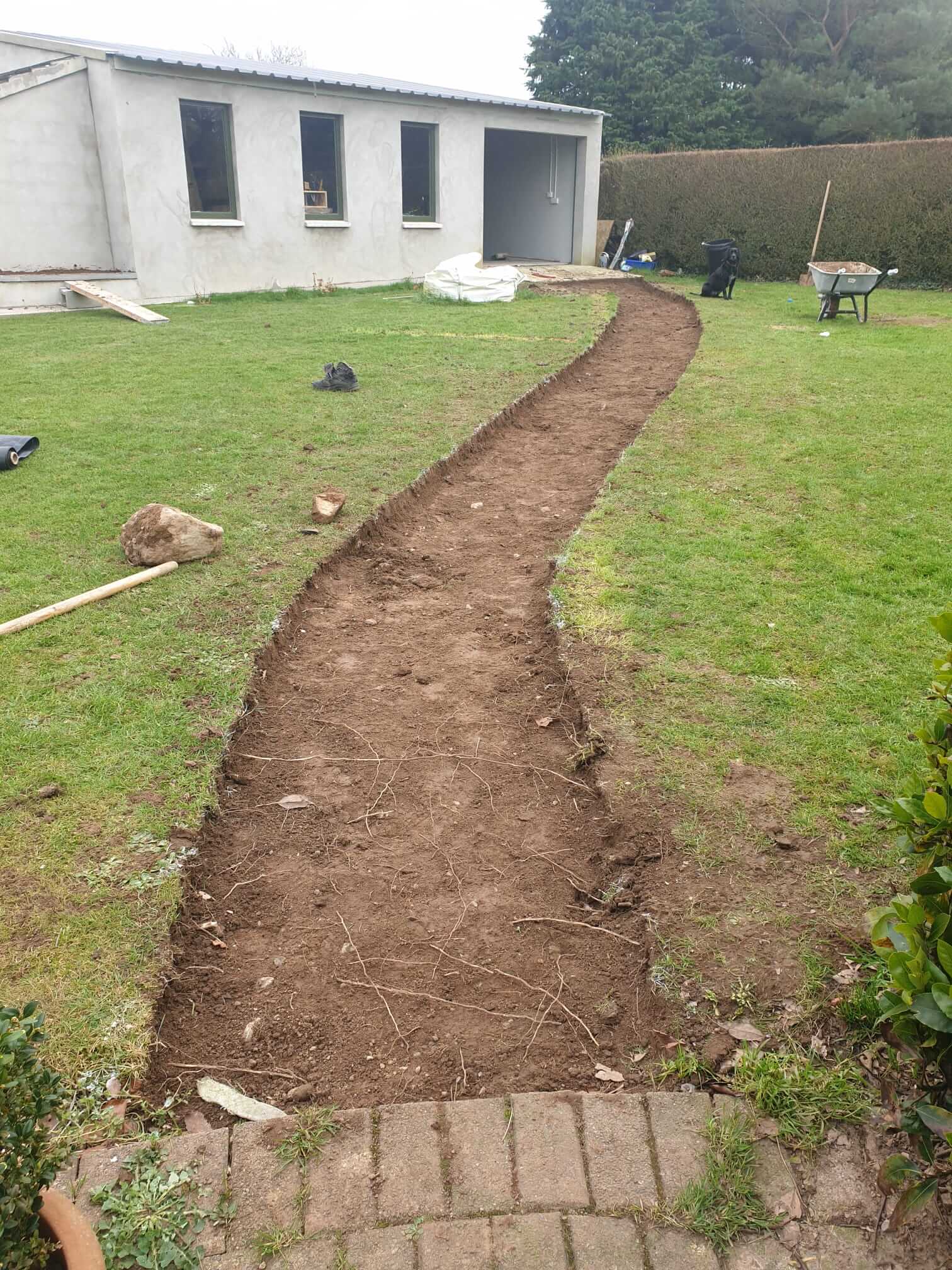
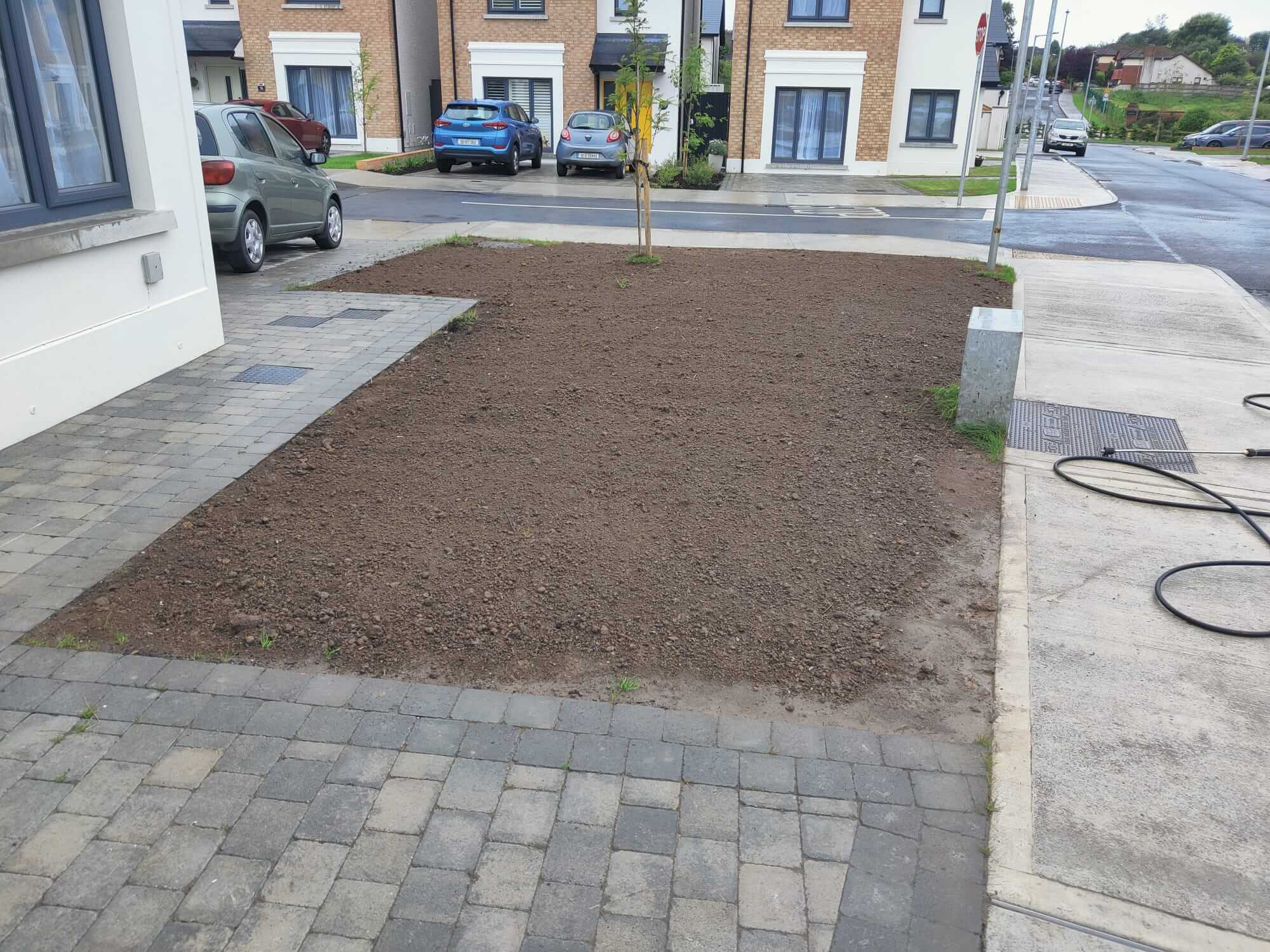
Lawn installation starts with cultivation — breaking up compacted topsoil or importing topsoil where the existing depth is insufficient, then levelling to a consistent grade with the falls needed to move surface water away from the house and toward drains or planted borders. A minimum of 100mm of good topsoil depth is needed for a lawn that doesn't thin out in dry summers. Turf establishes faster than seed and is less vulnerable to birds and rain displacement in the critical first weeks — on most domestic projects in Limerick where a finished result is needed quickly, turf is the right choice over seeding.
Where landscaping follows on from groundworks, paving or a garden room build, the sequencing advantage is that the ground levels and drainage requirements have already been established during earlier stages of the project. The landscaping works to those levels rather than starting from scratch — which means less remedial work, faster installation, and a finished garden that reads as planned from the start.
Landscaping Services Across Limerick
Signs You Need a Landscaping Contractor in Limerick
A garden that holds water after rain for more than a few hours is a drainage problem that won't resolve without intervention — adding more topsoil or turf over waterlogged ground makes the problem worse, not better.
A sloped garden that's been unused because it's difficult to maintain or access is usually a retaining wall and terracing job that opens up the space once it's done.
Failed or patchy lawn on a property that was recently built or renovated often traces back to inadequate topsoil depth or compaction from construction traffic — the lawn needs to come up, the ground needs preparation, and the lawn needs to go back down properly.
And any completed building project — extension, garden room, new paving — that's left the surrounding garden disturbed and unfinished needs landscaping to close the project out and make the finished result look deliberate.
Areas We Cover Across Limerick
Most of our work is within easy reach of Mungret — Raheen, Dooradoyle, Castletroy, Annacotty, Patrickswell and Adare are all regular jobs, along with Limerick city itself.
Further out, we cover Newcastle West, Rathkeale, Bruff and Kilmallock without it adding much to the timeline, since groundworks and garden room jobs don't need daily site visits once they're underway.
We also take on projects across the county border — Newmarket-on-Fergus and Sixmilebridge in Clare, and Nenagh and the surrounding area in Tipperary — though Limerick stays the priority when it comes to scheduling.
If you're outside these areas, get in touch anyway; it's worth a call to check rather than assuming you're too far out.

What Affects the Price of Landscaping in Limerick
Landscaping is quoted after a site visit because ground conditions, existing drainage, levels and access all affect the scope significantly:
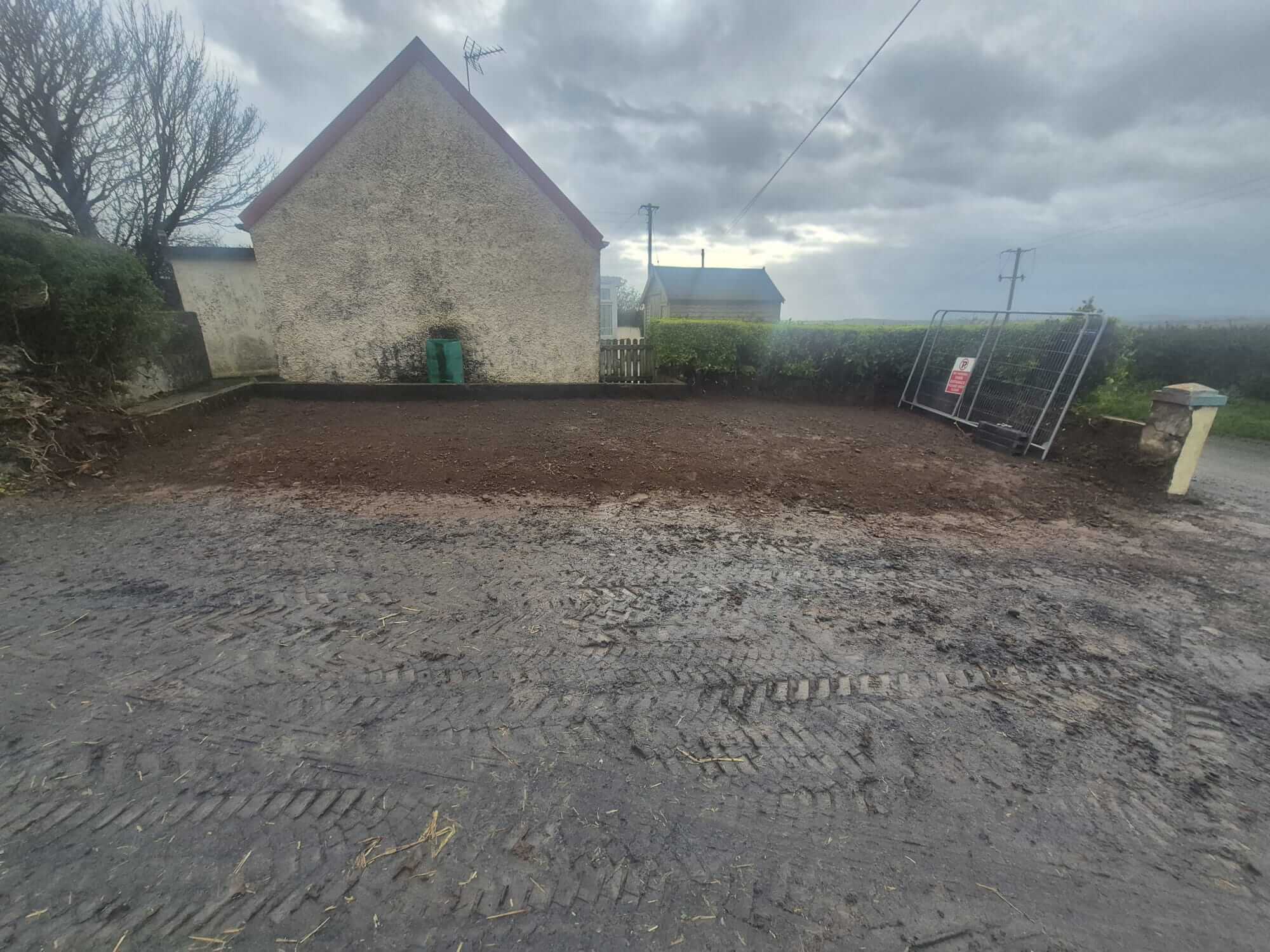
Site condition — a clear, level site with reasonable topsoil is faster and cheaper to landscape than one with compacted ground, rubble fill from construction, or significant level changes that need addressing before soft landscaping can go in.
Retaining wall height and length — the single biggest cost variable in hard landscaping. A 300mm sleeper edge is a different job to a 1.2m block retaining wall on a proper footing with drainage behind it.
Drainage complexity — a simple French drain to an existing outlet is straightforward. A full drainage system with soakaway, inspection chambers and multiple runs across the site is a larger job priced accordingly.
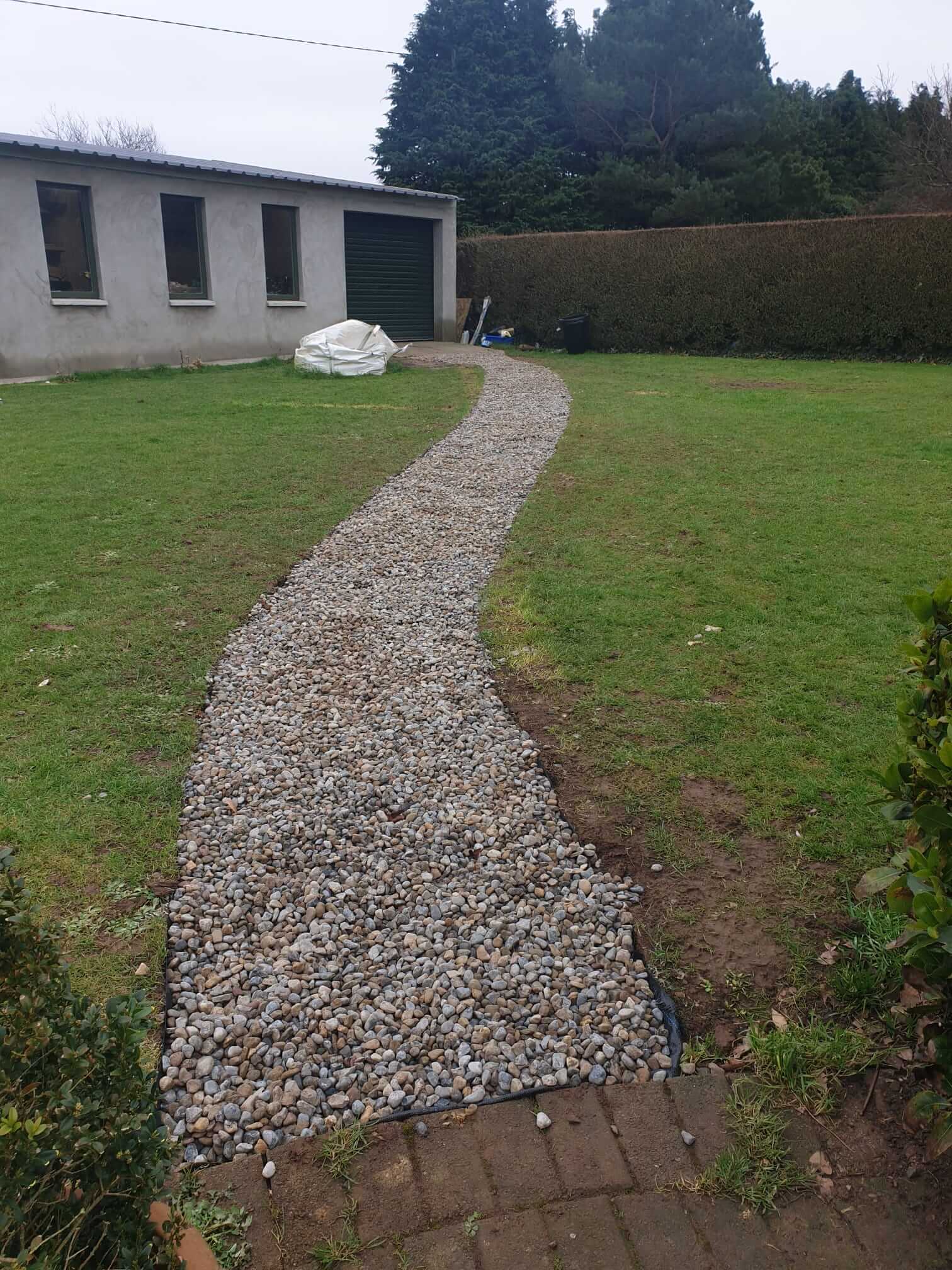
Lawn area — turf is priced per square metre once preparation costs are covered. Larger areas are more cost-effective per square metre than small, awkwardly shaped ones.
Planting specification — mature specimen plants and hedging cost more than smaller stock. Low-maintenance ground cover schemes cost less to install and less to maintain than mixed herbaceous planting.
Access for machinery — cultivation and levelling on sites where a mini-digger can't access takes longer than open sites. This gets assessed at the site visit.
Landscaping FAQs
Both — retaining walls, drainage, paving and hard landscaping come first, then lawn installation, planting and soft landscaping once the ground is ready.
Yes — landscaping as the closing stage of a larger project is the most common way we work. The drainage and level requirements are already established from the earlier groundworks stage.
Yes — French drains, soakaways and surface water drainage. Ground conditions get assessed on site before drainage is designed, since Limerick clay and free-draining ground need different approaches.
Yes — block retaining walls on concrete footings and sleeper walls for lower terracing. Wall spec depends on height retained and ground conditions behind the wall.
Both — turf for a faster result, seed where the budget or site suits it. Ground preparation is the same regardless of which goes down.
Depends heavily on scope. A site clearance, retaining wall and lawn on a suburban Limerick garden typically runs one to two weeks. Larger projects with drainage, hard landscaping and full planting take longer — realistic timelines are given at quote stage.
Fully insured, with a written guarantee on every job.
Any Questions?
Ask Us
Get a Free Landscaping Quote in Limerick
Whether it's a waterlogged garden that needs drainage before anything else can happen, a sloped site that needs terracing, or a finished building project that needs the surrounding garden closed out properly, the starting point is a site visit. We're booking landscaping work across Limerick and the surrounding area — get in touch to arrange a time.
More Services We Offer Across Limerick
Guilfoyle Building Services offers six trades, run by people who actually do the work — not subcontracted out to whoever's free that week. Pick one service or run several as a single sequenced project; either way, here's what's covered.

Garden Rooms
Timber-frame construction on a proper concrete or piled base, depending on ground conditions — not a shed kit bolted to slabs. Insulated to handle a Limerick winter, wired by a registered electrician, glazed for actual daylight. Office, gym, studio, granny flat: the structure's the same, the fit-out changes.

General Building Work
Extensions and renovations from foundation to final coat of paint. Blockwork, structural steel where it's needed, plastering, first and second fix carried out by the same crew throughout — so nobody's waiting three weeks for the next trade to show up.

Groundworks
Excavation, hardcore compaction, drainage runs and concrete poured to the right depth for what's going on top of it. A patio needs a different sub-base than a garden room foundation, and a foundation needs a different spec again depending on whether you're on Limerick clay or something better draining. We check before we dig, not after.

Paving
Block paving, resin-bound surfaces, natural stone — laid on a compacted sub-base with proper falls for drainage and edge restraints that actually hold. A driveway that pools water at the door six months in was never installed right to begin with.

Carpentry
Staircases, decking, fitted units, structural and finish carpentry on site or built off-site and fitted. Skirting that's actually mitred, doors that actually hang straight — the difference between carpentry and someone handy with a saw.

Landscaping
Retaining walls in block or sleeper, drainage where water's pooling, turf and planting once the hard landscaping's settled. Usually the last job on a project, after groundworks and paving have already moved the ground around.